Introduction
Many people wear glasses every day. But did you know that lens coatings can make your glasses even better? In this guide, we have lens coatings explained: blue light, anti-glare, and photochromic. Each coating has a special job. Some protect your eyes from screens, while others help you see better in bright light. Understanding these options can help you choose the best lens coatings for eye protection and comfort.
What Are Lens Coatings?
Lens coatings are thin layers added to eyeglass lenses. These layers give extra benefits beyond basic vision correction. For example, some coatings block harmful light, while others reduce glare. Because of these features, lens coatings are popular for both adults and children. You can find coatings for many needs, such as computer use or outdoor activities.
Blue Light Coatings: Benefits and Uses
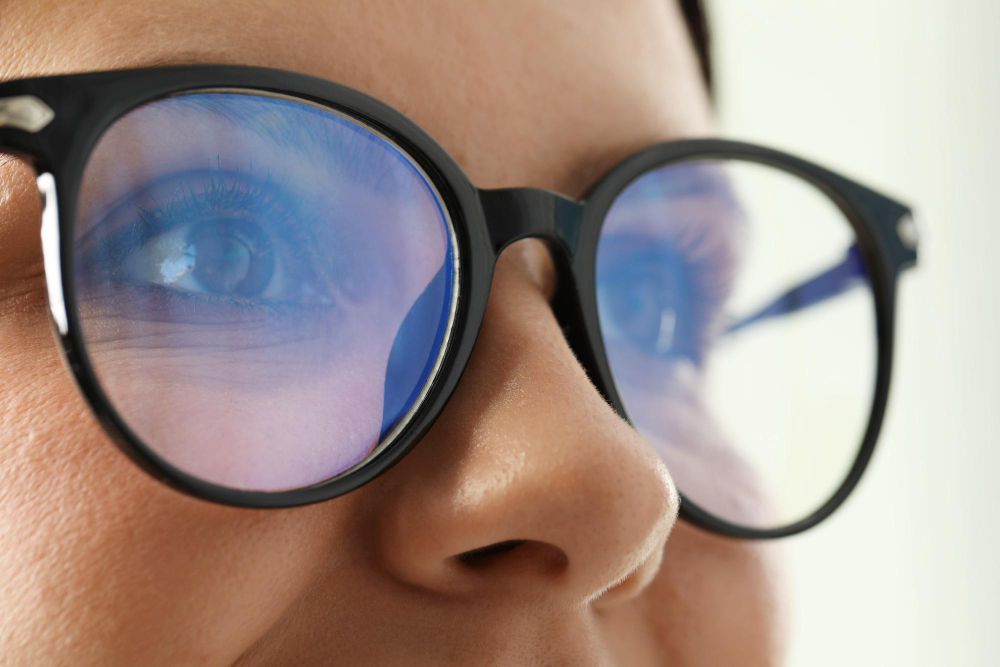
Blue light coatings filter out blue light from screens and digital devices. Today, many people spend hours looking at computers, tablets, and phones. As a result, blue light exposure has become a concern. According to the American Academy of Ophthalmology, blue light may cause eye strain and discomfort, but it does not cause eye disease. Still, blue light coatings can help reduce tired eyes and improve comfort.
For those who use screens often, blue light coatings are a smart choice. They can make long hours at the computer easier on your eyes.
Anti-Glare Coatings: How They Work
Anti-glare coatings, also called anti-reflective coatings, cut down on reflections from your lenses. Because of this, you see more clearly, especially in bright light or at night. These coatings are helpful when driving at night or working under strong lights. They also make your glasses look better by reducing lens reflections in photos.
Many people notice less eye strain and fewer headaches with anti-glare coatings. If you drive often or work under bright lights, this coating can be very helpful.
Photochromic Coatings: Features and Advantages
Photochromic coatings, sometimes called transition lenses, change color in sunlight. When you go outside, these lenses darken to protect your eyes from bright light. When you return indoors, they become clear again. This feature means you do not need to switch between regular glasses and sunglasses.
Photochromic coatings are a good choice for anyone who wants simple, all-in-one eye protection. According to the World Health Organization, protecting your eyes from UV rays can help prevent long-term eye problems.
How to Choose the Right Lens Coating
Choosing the right lens coating depends on your daily activities and needs. For example, if you use screens a lot, blue light coatings may help. If you drive at night or work under bright lights, anti-glare coatings are useful. For those who spend time both indoors and outdoors, photochromic coatings are a smart pick.
Here are some tips to help you decide:
Always talk to your eye doctor before making a choice. They can help you find the best lens coatings for eye protection and comfort.
Care Tips for Coated Lenses
Proper care keeps your coated lenses working well. Because coatings can be delicate, it is important to clean them gently. Here are some easy care tips:
With good care, your lens coatings can last longer and keep your vision clear.
Conclusion
In summary, lens coatings like blue light, anti-glare, and photochromic offer many benefits. They can protect your eyes, reduce strain, and make daily life easier. However, each coating serves a different purpose. Consult an eye care specialist Dr.Nikhil Karunakota to find the best lens coating for your needs.